Adverts
How about getting to know the changes in My home, my life? During mid-2023, a proposal emerged to reformulate the so-called housing program, aimed at helping low-income families acquire financing for their homes.
Subsequently, in July, President Luiz Inácio Lula da Silva sanctioned the law that reestablishes the program, which had already been implemented in previous governments, making these modifications permanent.
The Minha Casa Minha Vida program consists of a government initiative aimed at offering affordable housing in both urban and rural areas.
If you want to know more about how the program works, the new guidelines implemented in 2023 and how to register, continue reading this article.
See the new housing program rules
Who is entitled: the return of benefits to families in Track 1, which cover those with low income, and the extension of the income limits allowed for other groups (increasing the ceiling for gross family income).
- Expanding the inclusion of housing assistance in social rent;
- Possibility of purchasing used urban housing;
- Inclusion of families in vulnerable situations in housing policies;
- Increase in the maximum value of eligible properties;
- Increase in subsidized financial support;
- Reduction of interest rates;
- Increase in the minimum area of housing units;
- End of Caixa Econômica Federal's monopoly as the only financial institution operating the program;
- Improvement of the location of land, prioritizing integration with the urban fabric and access to infrastructure.
Who is entitled to Minha Casa Minha Vida?
Track 1
Recent modifications to the Brazilian housing program expand the Category 1 (urban) criteria to cover families with a total monthly income of up to R$ 2,640 (previously, up to R$ 1,800), corresponding to twice the current value of the minimum wage.
For families residing in rural areas, Category 1 includes those with a gross annual income of up to R$ 31,680.
Track 2
Category 2 (urban) comprises families with a total monthly income between R$ 2,640.01 and R$ 4,400.
For rural areas, Category 2 covers families with gross annual income between R$ 52,800.01 and R$ 96,000.
Track 3
Category 3 (urban) includes families with a total monthly income between R$ 4,400.01 and R$ 8,000.
With regard to families living in rural areas, Band 3 establishes a limit for gross annual income, falling between R$ 52,800.01 and R$ 96,000.
Property values in 2023
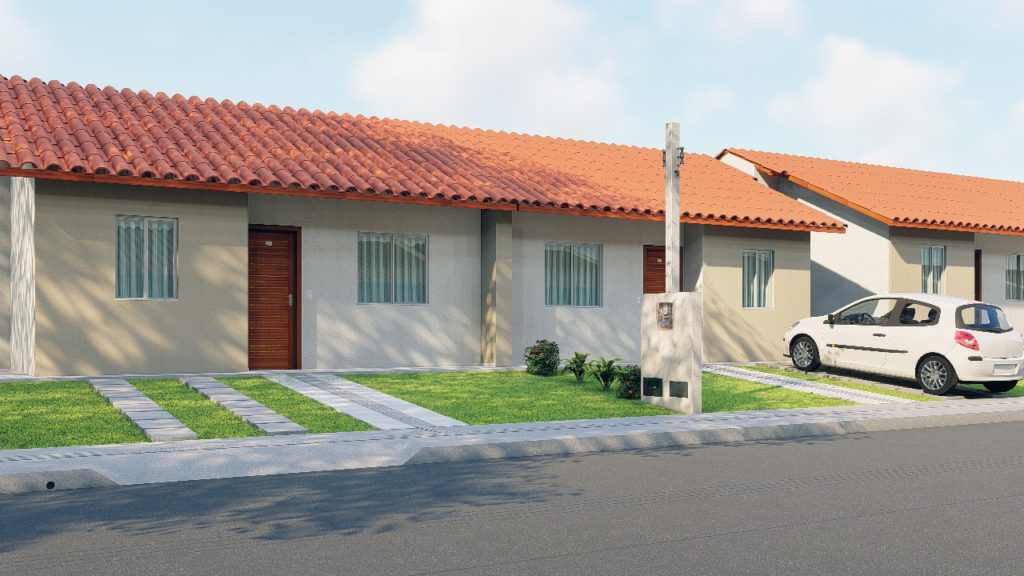
The “Minha Casa Minha Vida” housing program recently brought significant changes, including an update to the limits on property values that can be financed.
These changes were implemented for both urban and rural areas.
In relation to the urban area, the financing ranges are as follows:
- 1. Track 1 (properties with subsidy): Now, the value limit is R$ 170 thousand.
- 2. Track 1 and 2 (financed properties): The new value ceiling is R$ 264 thousand.
- 3. Track 3 (financed properties): The limit was extended to up to R$ 350 thousand.
For rural areas, the new guidelines are as follows:
1. For new properties, it is now possible to obtain financing of up to R$ 75 thousand, an increase from the previous amount of R$ 55 thousand.
2. In the case of property renovation, the new limit for financing is R$ 40 thousand, previously it was R$ 23 thousand.
These changes aim to make the program more accessible and comprehensive, benefiting a greater number of people seeking to own their own home, both in urban and rural areas.
Size of properties
O housing program “Minha Casa Minha Vida” recently implemented new rules that cover changes in the size of the properties covered.
Residences now have a minimum size of 40m² for houses and 41.5m² for apartments.
Additionally, all units include a balcony, and housing complexes must be equipped with a room dedicated to the library and devices for practicing sports activities.
Furthermore, the land allocated to the program must be located in urban areas, with access to infrastructure, and close to schools, health centers and public transport, among other essential services.
